Capital Gains or Risky Bet? The Real Economics of Flipping Property in Kenya
The unvarnished financial reality of flipping real estate in Kenya. Calculate 5% Capital Gains Tax, 4% Stamp Duty, advocate fees, renovation overruns, and true net profit margins.
The Seductive Myth of the Property Flip
Reality television and social media real estate influencers have popularized 'house flipping' as an easy, glamorous route to rapid wealth: buy an unloved, dated property at a discount, spend a few hundred thousand shillings on fresh paint and trendy tiles, and resell it 90 days later for a massive profit.
In Kenya'''s real estate market, profitable property flipping is certainly possible, but it is not a casual weekend hobby. It is an intensive, high-friction financial enterprise where success is determined by statutory tax rules, conveyancing turnaround times, and disciplined cost accounting.
The Golden Rule of Flipping
You make your profit when you buy, not when you sell. If you overpay for an asset on day one, no amount of cosmetic renovation will rescue your net return.
The Comprehensive Flip Accounting Model
To understand the real economics, consider a realistic Nairobi flipping project: acquiring a dated 2-bedroom apartment in Kileleshwa, renovating it to contemporary executive standards, and selling it to an end-buyer:
| Transaction Phase | Financial Item | Cost / Revenue | Percentage / Note |
|---|---|---|---|
| 1. Acquisition | Agreed Purchase Price | KSh 9,000,000 | Acquired below prevailing market comp |
| 1. Acquisition | Stamp Duty (Urban 4%) | KSh 360,000 | Paid to KRA on government valuation |
| 1. Acquisition | Advocate Legal Fees & VAT | KSh 156,600 | 1.5% scale fee + 16% VAT |
| 1. Acquisition | Valuation and Search Fees | KSh 25,000 | Physical inspection and Ardhisasa searches |
| 2. Renovation | Kitchen, Baths & Lighting | KSh 1,200,000 | New joinery, quartz counters, plumbing, paint |
| 2. Renovation | Contingency Buffer (15%) | KSh 180,000 | Unforeseen electrical and pipe repairs |
| 3. Holding Costs | Service Charge (6 Months) | KSh 42,000 | KSh 7,000 / month during rehab and sale |
| 3. Holding Costs | County Rates and Utilities | KSh 20,000 | Water, electricity, and county rates |
| Total Capital Outlay | Total Invested Capital | KSh 10,983,600 | All-in cash committed to asset |
| 4. Disposal | Final Resale Price | KSh 13,000,000 | Resold at premium to executive buyer |
| 4. Disposal | Estate Agency Commission | KSh 390,000 | Standard 3% sales commission |
| 4. Disposal | Vendor Legal Fees & VAT | KSh 226,200 | 1.5% scale fee on resale + VAT |
| 4. Disposal | Capital Gains Tax (CGT 5%) | KSh 70,010 | 5% on net adjusted capital profit |
| Net Profit & ROI | Net Realized Cash Profit | KSh 1,330,190 | 12.1% Net ROI over 8-month cycle |
Deconstructing the Math: The Friction Points
The case study illustrates several critical lessons for Kenyan property flippers:
- Transaction Friction Consumes Margins: Notice that statutory Stamp Duty, legal fees on both sides, valuation, agency commission, and taxes consume over KSh 1,200,000 of your gross upside.
- Holding Costs Compound: Every month the property sits unsold on the market, service charges, utility standing charges, and opportunity cost of capital eat into your net margin.
- Renovation Contingencies Are Mandatory: Older buildings in Nairobi inevitably conceal electrical wiring faults or plumbing leaks behind walls. Always maintain a 15% to 20% cash contingency reserve.
Flipping Reality Check
Off-Plan Flipping: The Capital-Light Alternative
A specialized variation of flipping is off-plan contract assignment:
You enter an off-plan development at the initial groundbreaking phase, placing a 20% deposit (say, KSh 1.6M on an KSh 8M apartment). Over the next 18 months, as construction advances and developer prices rise to KSh 10M, you assign your contract to a secondary buyer before completion.
Advantages: You capture substantial return on your actual cash invested (KSh 2M upside on KSh 1.6M committed) while avoiding Stamp Duty registration fees. However, you must verify that the developer allows contract assignments and review their assignment transfer fees (typically 1% to 2%).
Liquidity Risk in a Cooling Market
The greatest risk in house flipping is illiquidity. If buyer sentiment cools or mortgage rates spike, you may be forced to hold the property, converting it into a rental asset to service holding costs.
The Golden Checklist for Kenyan Property Flippers
Before committing your capital to a flip:
1. Ensure your purchase price is at least 15% to 20% below comparable renovated units on the same street.
2. Get formal quotes from registered contractors and lock in a fixed-price renovation contract with penalty clauses for delays.
3. Confirm that the title is clean and verified on Ardhisasa to prevent conveyancing delays when you find a buyer.
4. Always maintain an exit plan: if the property does not sell within 90 days of listing, are you prepared to tenant the unit for long-term rental income?
Key Takeaways
- 01.Round-trip transaction fees (Stamp Duty, legal fees, agent commissions, CGT) consume 10% to 12% of total property value.
- 02.A successful flip requires buying at an initial discount of at least 15% to 20% below fair market value.
- 03.Renovations must be disciplined, focusing on high-ROI areas: kitchens, bathrooms, flooring, and lighting.
- 04.Always maintain a dual strategy: ensure the property can easily be rented if market liquidity slows.
Identify High-Potential Properties with Zuri Estates
At Zuri Estates, we analyze property fundamentals with forensic precision. We help investors identify undervalued resale opportunities and high-upside off-plan developments with verified potential.
Explore our residential investment properties or contact our advisory team to model your next acquisition.

Zuri Estates Team
Property Advisory & Client Coordination
The Zuri Estates Team provides independent property guidance, market intelligence, and acquisition support across Nairobi and the Kenyan Coast. Operating from our Kilimani offices, our desk coordinates developer audits, physical site inspections, and legal conveyancing for homebuyers and investors.

Antony Baragu
Real estate strategist
This article has been reviewed by Antony Baragu to ensure the accuracy, completeness, and validity of all market metrics, property details, and investment guidance.
Related Residences, Developments & Neighbourhoods

KILIMANI · RIARA ROAD, OPPOSITE THE JUNCTION MALL, KILIMANI, NAIROBI
1 Bedroom Residence at Golden Apple Residence Kilimani
Calibrated 1-Bedroom Urban Suite with Deep Balcony Directly Opposite The Junction Mall

KILIMANI · RIARA ROAD, OPPOSITE THE JUNCTION MALL, KILIMANI, NAIROBI
1 Bedroom plus Study Executive Residence at Golden Apple Residence Kilimani
Generous 85 SQM Executive Suite with Dedicated Home Office Alcove Opposite The Junction Mall

Lavington · Quiet Gated Court, Lavington, Nairobi, Kenya
Lavington Luxury Villas
Distinguished 5-bedroom luxury villas spanning 6,000 sq ft with private pools and landscaped gardens.
Ongata Rongai · Off Maasai Lodge Road, Ongata Rongai, Kajiado, Kenya
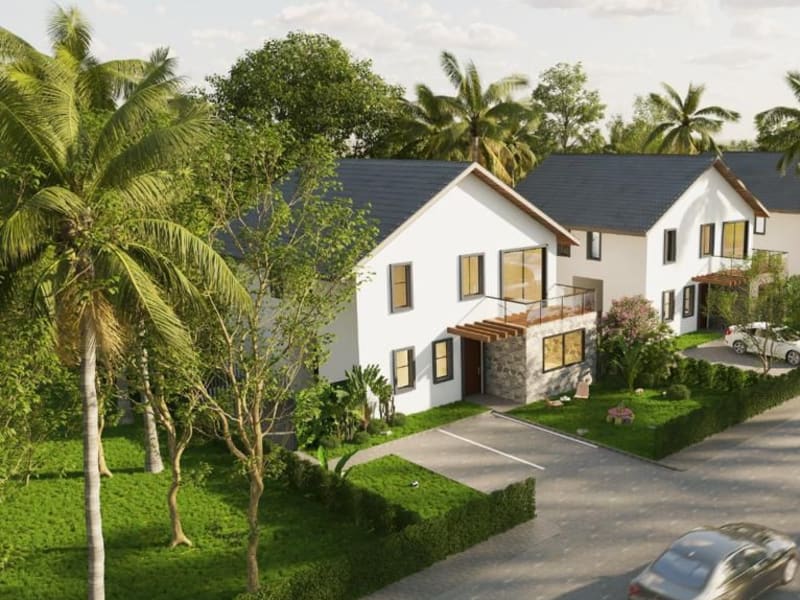
Shangrila Villas
Spacious 4-bedroom ensuite maisonettes set within a secure 20-acre enclave in Ongata Rongai.

Featured Neighbourhood
Kilimani
Nairobi's vibrant apartment district with exceptional rental demand and investment potential.
Featured Neighbourhood
Westlands
Nairobi’s premier commercial and luxury residential district with exceptional investment potential.
Featured Neighbourhood
Kileleshwa
A peaceful, upscale neighbourhood offering elegant apartment living close to Nairobi’s key business districts.


