Kenya's Property Market Explained: The Real Forces Shaping Supply, Demand, and Prices
Demographics, currency movements, infrastructure corridors, and construction inflation dictate property values in Nairobi. Here is a data-grounded breakdown of the economic forces driving Kenya's real estate market.

To make informed property decisions in Kenya, an investor must look beyond short-term market commentary. Real estate in Nairobi is not a single uniform market. It is an intricate ecosystem composed of distinct sub-markets, each responding to different economic incentives, financing realities, and tenant demographics.
While mainstream headlines occasionally vacillate between declaring an imminent property bubble or promising unrealistic investment windfalls, the empirical reality of Kenya's property sector is governed by clear fundamentals: rapid urbanisation, demographic household formation, construction material economics, and foreign exchange dynamics.
This comprehensive analysis examines the structural drivers governing Kenya's residential and commercial property market, providing local purchasers, diaspora investors, and international institutions with a grounded framework for evaluating risk and value.
Key Takeaways
- 01.Kenya's property market is largely equity-funded, with commercial bank mortgages accounting for fewer than 30,000 total loans nationwide.
- 02.Rapid national urbanisation and young demographic household formation create persistent underlying demand for functional, well-located urban housing.
- 03.Rising construction material costs (cement, steel, imported MEP and finishes) establish a firm replacement cost floor under newly delivered developments.
- 04.Diaspora remittances exceeding USD 4 Billion annually provide consistent, non-leveraged purchasing liquidity across prime residential enclaves.
- 05.Market performance is divergent: prime urban employment nodes (Westlands, Kilimani) demonstrate strong tenant absorption, while poorly serviced developments face yield pressure.
1. The Demographic Engine: Urbanisation and Household Formation
The foundational driver of Kenya's residential real estate demand is demographic. According to data from the Kenya National Bureau of Statistics (KNBS), Kenya's urban population continues expanding at approximately 3.7 percent annually, significantly outpacing the national population growth rate.
Every year, tens of thousands of young professionals, graduates, and entrepreneurial households enter the formal economy in Nairobi. Unlike previous generations who prioritized purchasing rural land parcels for retirement, modern urban Kenyans require functional, well-connected housing near primary employment corridors.
Furthermore, household structures in Nairobi are evolving rapidly:
* Smaller Household Sizes: The average urban household size has transitioned from 4.5 persons a generation ago to 2.8 to 3.2 persons today, driving intense demand for 1-bedroom, 1-bedroom plus study, and compact 2-bedroom apartment layouts.
* Rising Single-Person Households: Tech sector professionals, corporate analysts, and expatriate NGO workers increasingly seek independent, high-security apartment living rather than shared suburban rentals.
* Dual-Income Partnerships: Career-focused couples prioritize short daily commutes, access to lifestyle gyms, dining precincts, and secure environments over expansive suburban gardens that entail two-hour traffic jams.
2. The Financing Reality: Why Nairobi Is Not a Leveraged Bubble
International observers frequently ask whether Nairobi is vulnerable to a credit-fueled real estate crash similar to Western markets during 2008. The answer lies in the fundamental structure of Kenyan property financing.
Data from the Central Bank of Kenya reveals that the entire formal banking sector holds approximately 28,000 to 30,000 residential mortgages across a country of over 50 million people. Commercial bank mortgage lending in Kenya is constrained by high base lending rates (often exceeding 15 percent to 18 percent for variable commercial debt), strict collateral requirements, and conservative income underwriting.
Kenya Property Financing Structural Data
Because commercial mortgages account for less than 2 percent of Kenya's Gross Domestic Product, property developers and buyers do not rely on high-leverage bank debt to transact. Instead, the market is powered by:
1. Staggered Off-Plan Cash Terms: Buyers fund acquisitions through interest-free construction milestone instalments spread over 24 to 36 months, funded directly from corporate profits, dividends, and personal savings.
2. SACCO Financing: Savings and Credit Cooperative Societies (SACCOs) provide competitive personal asset-financing loans at fixed single-digit interest rates (typically 10 percent to 12 percent on reducing balance) backed by member savings.
3. Diaspora Capital: Kenyans living in North America, Europe, Australia, and the Gulf transfer billions of shillings directly into residential real estate assets as a long-term inflation hedge.
Because properties are largely purchased with genuine equity rather than volatile subprime mortgage debt, forced distress sales during economic downturns remain limited, preventing systemic price crashes.
3. The Replacement Cost Floor: Construction Material Economics
A critical concept that many property buyers misunderstand is replacement cost. You cannot build a modern high-rise tower in Nairobi today for the same budget that was possible five years ago.
Modern residential developments require substantial imported materials and energy-intensive inputs. The cost of structural steel rebar, bulk Portland cement, mechanical lifts, diesel backup generators, tempered architectural glass, copper cabling, and porcelain ceramic tiling has increased substantially due to global supply chain adjustments, fuel transport logistics, and foreign currency movements.
| Key Construction Input | Source Market | Cost Inflation Driver | Impact on Finished Unit Pricing |
|---|---|---|---|
| Reinforced Steel Rebar (Y12-Y32) | Local rolling mills & imported billets | Global iron ore prices, electricity tariffs, transport fuel | Increases structural superstructure framing costs |
| Bulk Portland Cement (42.5N) | Local Kenyan manufacturing plants | Clinker import duties, energy costs, limestone transport | Raises foundation raft, retaining walls, and slab costs |
| High-Speed Passenger Lifts | Europe, China, Japan (KONE, Schindler, Otis) | USD exchange rate, ocean freight, specialized technical import tariffs | Directly elevates vertical MEP costs on towers above 15 storeys |
| Backup Diesel Generators | UK, USA, Europe (Perkins, Cummins, FG Wilson) | USD foreign exchange, logistics, high-capacity copper winding costs | Increases core power infrastructure budget by millions of shillings |
| Porcelain Floor Tiles & Sanitaryware | Spain, Italy, India, China | Import shipping container rates, port handling, KRA customs tariffs | Directly impacts internal finishing budget per square metre |
Because developers must spend more cash per square metre to construct a building today, newly launched developments must enter the market at higher price points to preserve baseline commercial viability. This economic reality prevents developers of quality developments from slashing prices, effectively anchoring the floor value of the entire market.
4. Sub-Market Divergence: Prime Enclaves Versus Speculative Outskirts
The most important lesson for any property investor in Kenya is recognizing sub-market divergence. Performance across different nodes is widening significantly:
* Prime Core Urban Employment Nodes ([Westlands](/locations/westlands), [Kilimani](/locations/kilimani), [Parklands](/locations/parklands)): Characterized by dense commercial headquarters, diplomatic missions, and vibrant dining precincts. Rental occupancy remains high (consistently above 85 percent in well-managed developments), driven by expatriate staff, multinational consultants, and high-yield serviced apartment demand.
* Established Leafy Family Enclaves ([Kileleshwa](/locations/kileleshwa), [Lavington](/locations/lavington), [Muthaiga](/locations/muthaiga), [Runda](/locations/runda)): Appeal primarily to long-term owner-occupiers and established expatriate families seeking proximity to international schools (Braeburn, ISK, Rosslyn Academy, French School). These enclaves emphasize privacy, low acoustic disturbance, and spacious multi-bedroom layouts.
* Commuter Satellite Towns (Ruaka, Athi River, Kitengela, Ruiru): Heavily dependent on road connectivity and transport costs. When fuel prices or matatu fares rise, satellite town tenant budgets become strained, leading to higher tenant turnover and longer vacancy periods between leases.
The Flight to Operational Quality
Tenants in Nairobi have become significantly more discerning. Buildings that lack an independent borehole with filtration, or developments that install undersized generators that only power lobby hallway lights during blackouts, face substantial rent reductions. Conversely, full-service residences with comprehensive infrastructure command premium rental rates.
5. Making Confident Investment Decisions in Kenya
Kenya's property market rewards investors who base their acquisitions on verified operational data rather than optimistic sales projections. The path to lasting capital growth involves identifying well-calibrated developments in prime locations where tenant demand is organic, resilient, and anchored to real economic activity.
At Zuri Estates, we provide comprehensive property market advisory, yield modelling, and document vetting to help our clients build secure, high-performing property portfolios. Whether you are seeking a high-yield executive residence in Westlands or a contemporary family home in Kilimani, our advisory team is here to guide you with proven market insight.
Explore our complete selection of verified residential opportunities across Westlands, Kilimani, and Lavington, or contact Zuri Estates today to schedule an analytical property consultation.

Zuri Estates Team
Property Advisory & Client Coordination
The Zuri Estates Team provides independent property guidance, market intelligence, and acquisition support across Nairobi and the Kenyan Coast. Operating from our Kilimani offices, our desk coordinates developer audits, physical site inspections, and legal conveyancing for homebuyers and investors.

Antony Baragu
Real estate strategist
This article has been reviewed by Antony Baragu to ensure the accuracy, completeness, and validity of all market metrics, property details, and investment guidance.
Related Residences, Developments & Neighbourhoods

KILIMANI · RIARA ROAD, OPPOSITE THE JUNCTION MALL, KILIMANI, NAIROBI
1 Bedroom Residence at Golden Apple Residence Kilimani
Calibrated 1-Bedroom Urban Suite with Deep Balcony Directly Opposite The Junction Mall

KILIMANI · RIARA ROAD, OPPOSITE THE JUNCTION MALL, KILIMANI, NAIROBI
1 Bedroom plus Study Executive Residence at Golden Apple Residence Kilimani
Generous 85 SQM Executive Suite with Dedicated Home Office Alcove Opposite The Junction Mall

Kilimani · Riara Road, Opposite The Junction Mall, Kilimani, Nairobi
Golden Apple Residence
Kilimani's Urban Benchmark: Twin-Tower Sophistication Directly Opposite The Junction Mall

Westlands · Ring Road, Opposite The Oval, Westlands, Nairobi
Hephé Palace
Nairobi's Dual-Horizon Crown: Where 25 Storeys of Architectural Mastery Meet Karura Forest Serenity
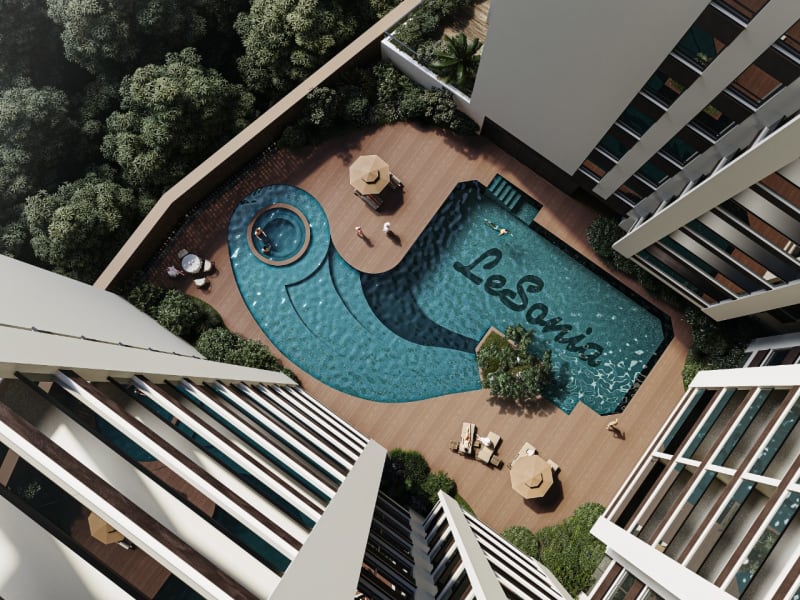
Kileleshwa · Intersection of Gatundu Road & Tinderet Avenue, Kileleshwa, Nairobi
Lesonia Residency
Contemporary Balcony-Garden Living in Prime Kileleshwa

Featured Neighbourhood
Kilimani
Nairobi's vibrant apartment district with exceptional rental demand and investment potential.
Featured Neighbourhood
Westlands
Nairobi’s premier commercial and luxury residential district with exceptional investment potential.
Featured Neighbourhood
Kileleshwa
A peaceful, upscale neighbourhood offering elegant apartment living close to Nairobi’s key business districts.

