Sectional Titles in Kenya: What the 2020 Act Means for Apartment Owners
The Sectional Properties Act 2020 transformed apartment ownership in Kenya, phasing out ambiguous long-term subleases in favor of individual freehold or leasehold title deeds. Here is how the law protects buyers, mandates conversions, and establishes the Corporation of Owners.

For decades, buying an apartment in Nairobi or Mombasa came with an uncomfortable legal ambiguity. While buyers paid millions of shillings for luxurious penthouses and executive suites, they rarely walked away with an authentic title deed. Instead, they received a long-term sub-lease, typically drafted for 99 years, issued by a private management company often controlled indefinitely by the original developer.
This legacy structure created severe vulnerabilities: developers holding onto original mother titles, charging predatory management fees, withholding common areas, or taking bank charges against the primary land without homeowner consent.
The enactment of the Sectional Properties Act 2020 (Act No. 21 of 2020) and the Sectional Properties Regulations 2021 marked a watershed moment for Kenya real estate. It aligned apartment ownership with international best practices, giving unit buyers direct, unassailable legal titles guaranteed by the Constitution and registered at the Ministry of Lands.
Sub-Leases vs Sectional Titles: The Structural Difference
To appreciate the security offered by the 2020 Act, understand how the new legal framework fundamentally transforms your property rights:
| Legal Feature | Legacy Sub-Lease Regime | Sectional Properties Act 2020 |
|---|---|---|
| Title Instrument | Sub-lease contract from management company | Certificate of Sectional Title issued by Ministry of Lands |
| Mother Title Status | Remains with developer or management entity | Surrendered and canceled upon sectional plan registration |
| Common Property Ownership | Owned by management company (developer-controlled) | Owned by all unit owners as tenants in common |
| Bank Collateral Acceptance | Reluctant; complex tripartite legal agreements | Readily accepted as prime mortgage security |
| Governance & Management | Private company shares (Companies Act rules) | Statutory Corporation of Owners (Democratic bylaws) |
| Digital Registration | Manual physical paper registries | Digitally registered on ArdhiSasa platform |
How the Conversion Process Works
Under statutory directives, all apartment developments across Kenya with existing sub-leases must transition to the new regime. The conversion workflow follows four structured phases:
1. Sectional Plan Preparation: A licensed surveyor prepares a comprehensive Sectional Plan delineating each individual apartment boundaries, common areas, parking allocations, and calculated unit factors (the mathematical percentage of common property attached to each unit).
2. Survey Office Verification: The Director of Surveys reviews, approves, and assigns official sectional numbers to the development.
3. Ministry of Lands Registration: The original mother title, the approved sectional plan, and existing sub-leases are lodged at the Lands Registry (via the digital ArdhiSasa portal in Nairobi).
4. Sectional Title Issuance: The Chief Land Registrar closes the old sub-lease register and issues an individual Certificate of Sectional Title to each property owner in their full legal name.
The Corporation of Owners: Empowering Homeowners
One of the most transformative elements of the Sectional Properties Act 2020 is Section 17, which establishes the Corporation of Owners:
Upon the registration of a sectional plan, there is constituted a corporation consisting of the owners of the units in the parcel to which the sectional plan relates.
Crucially, this Corporation is created automatically by statutory law. It does not require incorporation under the Companies Act, eliminating annual corporate filing fees, secretarial overhead, and developer dominance.
The Corporation responsibilities include:
- Enforcing community bylaws governing noise, pets, external architectural alterations, and short-stay operations.
- Establishing an administrative fund for operational costs and a mandatory reserve sinking fund for major long-term capital replacements (such as roof replacement or lift modernization).
- Procuring comprehensive structural and fire insurance for the entire building.
- Electing a transparent management committee composed of homeowners to oversee property management contractors.
The Sectional Properties Tribunal
In any multi-unit building, disagreements naturally arise regarding service charge non-payment, unauthorized parking use, or plumbing leaks across unit ceilings. Historically, resolving these disputes required expensive, multi-year civil litigation in the High Court.
The 2020 Act solved this by creating the specialized Sectional Properties Tribunal. The tribunal possesses judicial authority to issue binding orders, determine service charge arrears, penalize bylaw violations, and order structural repairs quickly and affordably.
Buyer Due Diligence Checklist for New Apartments
Before purchasing an apartment in Kenya today:
1. Verify the Title Mode: Explicitly ask the developer whether the development is registered under the Sectional Properties Act 2020.
2. Inspect the Registered Sectional Plan: Confirm that your specific unit number, floor level, interior square footage, and designated parking bays match the official survey plan.
Key Takeaways
- 01.The Sectional Properties Act 2020 replaces ambiguous developer-controlled sub-leases with independent, government-issued sectional title deeds.
- 02.Each apartment owner holds direct registered title to their interior living unit and an undivided proportional share in the common property.
- 03.A Corporation of Owners is automatically established upon sectional plan registration, giving homeowners direct democratic control over building management.
- 04.Commercial banks in Kenya now strongly prefer or require sectional title deeds for mortgage financing and loan collateral.
- 05.The specialized Sectional Properties Tribunal provides a dedicated, cost-effective forum for resolving resident disputes and enforcing bylaws.
3. Review the Corporation Bylaws: Check whether the building permits short-stay Airbnb operations, pet ownership, or commercial office use.
4. Demand Sectional Title Delivery: Ensure your Agreement for Sale specifies that final balance disbursement is conditional upon delivery of your stamped, registered Sectional Title Deed.

Zuri Estates Team
Property Advisory & Client Coordination
The Zuri Estates Team provides independent property guidance, market intelligence, and acquisition support across Nairobi and the Kenyan Coast. Operating from our Kilimani offices, our desk coordinates developer audits, physical site inspections, and legal conveyancing for homebuyers and investors.

Antony Baragu
Real estate strategist
This article has been reviewed by Antony Baragu to ensure the accuracy, completeness, and validity of all market metrics, property details, and investment guidance.
Related Residences, Developments & Neighbourhoods
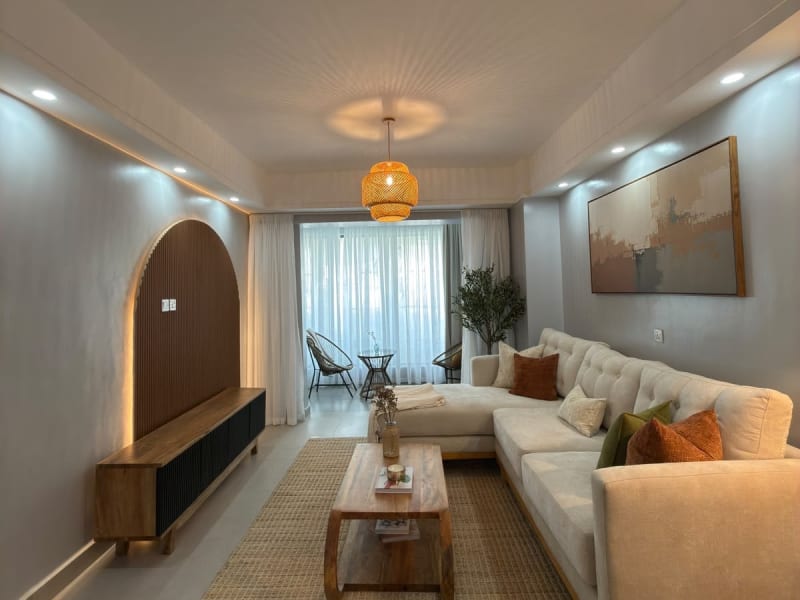
KILIMANI · MENELIK ROAD, OFF NGONG ROAD, KILIMANI, NAIROBI
Emerald Residences
Modern urban living with strong investment potential in Kilimani

WESTLANDS · NAIROBI
Oak West 2 Bedroom Apartment
Contemporary 2-bedroom living in the heart of Westlands.

Westlands · Vihiga Road, Kilimani, Nairobi
Luster Arbor Residency
Modern apartments designed for elegant city living and exceptional long-term investment.

Westlands · Muthithi Road, Westlands, Nairobi, Kenya
Montbleu Residences Westlands
Elevated Living. Timeless Design. Prime Westlands Address.

Featured Neighbourhood
Kilimani
Nairobi's vibrant apartment district with exceptional rental demand and investment potential.
Featured Neighbourhood
Kileleshwa
A peaceful, upscale neighbourhood offering elegant apartment living close to Nairobi’s key business districts.
Featured Neighbourhood
Westlands
Nairobi’s premier commercial and luxury residential district with exceptional investment potential.


