When a Building Falls: What the Eastleigh Collapse Tells Us About Property Safety in Kenya
A multi-storey building collapsed in Eastleigh, Nairobi on 23 October 2026, reigniting an urgent question: how can buyers, tenants and investors know whether a building in Kenya is safe? What happened, what is still unknown, and what every property decision-maker should check.
At around one in the afternoon on Friday, 23 October 2026, a building under active construction on 9th Street in Eastleigh, Nairobi, came down. The structure had been rising floor by floor above a ground level already occupied by shops. Workers were on the upper levels. Traders were open for business below. In the minutes that followed, a multi-agency rescue operation began that would continue into the following day.
Eastleigh is a place where people go to work, open shops, buy household goods, meet customers and earn a living. When a building collapses in the middle of that everyday life, the consequences extend beyond concrete and steel. Families wait for news. Traders worry about their livelihoods. People who live and work in other buildings nearby may begin questioning their own safety.
What Eastleigh experienced was not the first building collapse in Nairobi's recent history, and the questions it raises are not new. But they matter, and they matter to anyone who has bought a flat, rented a shop, walked through a construction site, or trusted that a building with a modern facade is safe to enter. This article presents what is known, what has been officially stated, what remains under investigation, and what every person making a property decision in Kenya can actually do to protect themselves.
Research Cutoff and Developing Situation
This article was researched and written on 24 October 2026. The casualty and rescue situation remained active at the time of publication, and key findings from ongoing investigations had not yet been released. Treat casualty figures and investigation updates as time-sensitive. Check current news sources for the most recent information.
What Happened on 23 October 2026
The building that collapsed was a multi-storey structure under construction on 9th Street near Yusuf Haji Avenue in Eastleigh, Kamukunji Sub-County. Initial reports from Kenyan media described the structure as ranging from 12 to 18 floors. This discrepancy reflects the difficulty of counting storeys in a partially built building and the speed at which early reporting was filed. Governor Johnson Sakaja later stated that the application submitted to the county was for a 15-storey building plus a basement, providing the most specific official figure available at the time of writing.
The National Construction Authority's official statement, signed by Acting Executive Director and Registrar of Contractors Susan C. Rutto, confirmed that the project was registered on 30 July 2025 under registration number 53128815710410. The developer is listed as 9th Street Plaza Limited and the contractor as Stromax Holdings E.A. Limited.
At the time of the collapse, the basement and ground floor were already occupied and operational. Interior Cabinet Secretary Kipchumba Murkomen confirmed that approximately 11 shops were open for business, including electronics retailers, a butchery, and a grocery outlet. Construction was continuing on the upper floors simultaneously.
Workers who fled the building in the moments before the collapse reported noticing alarming cracks in structural columns and hearing unusual sounds, according to reports from Kenyans.co.ke and The Star. These are firsthand accounts by witnesses, not the observations of engineers or investigators. They describe what people experienced; they do not establish the engineering cause.
Change-of-user application approved
Nairobi City County approved a change-of-user application for the land, according to Governor Sakaja. The land is associated with the estate of the late Wilson Mutia Musyoki.
NCA project registration
The project is registered with the National Construction Authority under number 53128815710410. Developer: 9th Street Plaza Limited. Contractor: Stromax Holdings E.A. Limited.
Construction plans application never granted
Governor Sakaja stated that a subsequent application to construct a 15-storey building plus a basement was never granted by the county government.
Building collapses
The structure collapses. Workers on upper floors and traders in occupied ground-level and basement shops are affected. A multi-agency rescue operation is launched immediately.
Official statements and investigations launched
NCA releases project registration details. Governor Sakaja confirms approval status. Interior CS Murkomen confirms 67 workers, 7 missing, 1 hospitalised. EBK and NCA open formal investigations. Police launch manhunt for owner and contractor.
Who Was on Record, and What the Approvals Picture Shows
The NCA's official statement identified the following parties as being on record for the project:
Developer: 9th Street Plaza Limited
(linked in other reports to John Mutia Musyoki, associated with the estate of the late Wilson Mutia Musyoki).
Contractor: Stromax Holdings E.A. Limited
(Registration No. 41669/B/0618).
Project Architect: Emmanuel Mwangi Maina
(Reg. No. A2045).
Structural Engineer: Joseph Muturi Mugu
(Reg. No. A2750), with Precise Civil Engineering Limited also cited in structural submissions according to some reports.
Physical Planner: Nathan Mutunga Kiti
, named in county-level documentation according to Pulse Kenya and other outlets.
These parties are named in the project records and are subject to investigation. Being named in records, being investigated, or being publicly identified is not proof of negligence or criminal liability. The relevant investigations will determine what happened and who, if anyone, bears responsibility.
What NCA Registration Means and What It Does Not Mean
NCA project registration confirms that a formal contract was awarded to a registered contractor and that qualified professionals are on record. It does not confirm that county building plan approvals were obtained, that construction matched the approved plans, that required inspections were carried out, or that the finished or in-progress building is structurally safe. Registration is one required step in a longer chain; it is not a safety certificate for the building itself.
Governor Sakaja stated clearly that while a change-of-user application had been approved in 2024, the actual building plans application was never granted. If accurate, that means construction proceeded without the fundamental county authorisation required by the Physical and Land Use Planning Act 2019. The building also had no occupation certificate despite active commercial occupation of its lower levels.
How Buildings Fail: What Investigators Need to Examine
The desire to know immediately what caused a collapse is understandable. But a reinforced-concrete multi-storey building can fail for multiple reasons, and rarely does a single photograph or eyewitness account tell the full story. Engineers and investigators examine the following categories of potential failure. These are investigation avenues, not claims about what happened specifically at Eastleigh.
Structural design and load capacity
A building must be designed to carry the full weight it will experience: the weight of the structure itself, the people and contents inside it, and dynamic forces such as wind. If the design was inadequate, or if the building was modified without a corresponding engineering review, parts of the structure may have been under-designed for the actual loads they carried.
Construction that departs from approved designs
Investigators compare the building as it stood with the structural drawings that were approved. If floors were added beyond the design, column sizes reduced, reinforcement spacing altered, or structural elements omitted, the actual structure may have been weaker than the approved design. Governor Sakaja's statement about plans that were never approved raises the question of whether the building's design was ever formally reviewed by the county.
Concrete quality and reinforcement
Reinforced concrete must meet specified strength standards. Concrete that is incorrectly mixed, poorly cured, or made with incorrect proportions may fail to reach the required strength. Reinforcement bars must be the correct diameter, correctly spaced, and properly anchored. These properties cannot be established by looking at a finished building. They require materials testing records, laboratory cube test results, and physical examination of the failed elements.
Foundation and ground conditions
A building's foundations must match the soil conditions beneath them. Where soil bearing capacity is lower than assumed, or where conditions vary across the footprint, settlement or movement can introduce stresses the structure was not designed to handle. A geotechnical investigation report is a standard requirement for multi-storey construction; whether one was conducted and followed for this project is part of what investigators will need to establish.
Construction sequencing and temporary supports
Multi-storey buildings are not built all at once. They rise in stages, and each stage must be stable before the next begins. If formwork is removed too early, if temporary bracing is omitted, or if loads are applied before concrete has gained sufficient strength, a partial failure can trigger a progressive collapse. The fact that upper floors were still under construction when the lower floors were occupied adds complexity to this investigation.
Professional supervision and site inspection
Kenyan law requires that registered professionals — architects, structural engineers, and quantity surveyors — supervise construction at defined stages. The NCA Act mandates that the contractor notify the authority of commencement and completion, and that professionals certify compliance. If supervision was absent, intermittent, or overruled by commercial pressure, critical defects may have gone undetected. The Engineers Board of Kenya has opened a professional conduct inquiry into the structural engineer of record.
Why This Matters Beyond One Building
A building is more than concrete, floors, location and investment value. People live and work inside it. They trust the people who design it, build it, approve it and allow it to be occupied. When a building collapses, the questions extend beyond the rubble to the decisions and safeguards that should protect people.
The Eastleigh collapse brings into focus a chain that should hold together: county approval of plans, NCA registration of the project, professional supervision during construction, materials testing, stage inspections, a completion certificate, and finally an occupation certificate. In this case, multiple links in that chain appear to have been missing or broken. The county says plans were never approved. The building had no occupation certificate. Yet shops were trading and workers were on site.
This is not only about Eastleigh. It is about every building in Kenya where someone is deciding whether to buy, rent, or invest. The facade, the finishes, the brochure and the price are not substitutes for the approvals and oversight that should stand behind them.
What Property Buyers and Tenants Can Learn
The incident should be the starting point for a broader, practical question: how can someone make more informed decisions about the safety of a property in Kenya? Below are practical steps, grounded in the regulatory framework that actually exists.
Before buying
Verify the seller's identity and authority to sell. An independent advocate should conduct an official title search via ArdhiSasa or a land registry office. Do not rely on copies of documents provided by the seller or agent.
Request and verify county-approved architectural and structural drawings. The approval stamp and reference number should be traceable to the county's physical planning department. A document produced by the developer must be verified with the issuing authority.
Confirm NCA project registration directly with the NCA. The registration number should be searchable on the NCA portal or verifiable through their offices. Registration confirms a licensed contractor and registered professionals are engaged; it does not guarantee construction compliance or structural safety.
Check the professional registration of the architect and structural engineer. The Engineers Board of Kenya (ebk.or.ke) and the Board of Registration of Architects and Quantity Surveyors (boraqs.go.ke) maintain public registers. The names on the drawings should match the registered professionals.
Request the completion certificate and occupation certificate. A completion certificate confirms the building was finished according to approved plans. An occupation certificate, issued by the county after final inspection, authorises legal occupation. Without it, occupation is unlawful and insurance may be void.
Commission an independent structural inspection by a registered engineer of your choosing — not one appointed by the developer. This is especially important for buildings where the approval chain is unclear or where construction was visible while occupation was already happening.
For apartments, ask about the management of shared spaces, maintenance records, sinking fund status, and whether the building has a valid occupation certificate. The management company or residents' association should be able to provide this.
Have an independent conveyancing advocate review the sale agreement and all representations about the property's approvals and condition. Never rely on the seller's advocate or a family proxy when significant money is at stake. Diaspora buyers should use an advocate they have independently instructed, with funds held in a client account.
Before renting
Tenants can reasonably ask a landlord or agent for the building's occupation certificate and any recent structural assessment reports. For commercial premises, the county's single business permit process may reveal whether the building has the necessary approvals. A casual viewing cannot establish structural safety. If the landlord cannot produce an occupation certificate or dismisses questions about structural assessments, that is information in itself.
When something appears unsafe
Potentially concerning signs include new or rapidly widening cracks in structural elements such as columns, beams or load-bearing walls; doors or windows that suddenly jam or no longer close properly; visible concrete spalling or exposed reinforcement bars; unusual vibration, sway or movement in the building; and water seepage appearing in new areas. These signs vary in significance. Hairline cracks in plaster are often cosmetic. Diagonal cracks in concrete structural elements, cracks that appear suddenly, or cracks that grow in width are more serious and require assessment by a qualified structural engineer. No untrained person should attempt to diagnose structural cracks conclusively.
If You Believe There Is Immediate Danger
Leave the affected area immediately. Do not stop to gather belongings or investigate. Contact emergency services on 999 or 112. Report the concern to the county public works department and the NCA hotline at 0800 720 180. Do not re-enter the building until it has been cleared by a qualified structural engineer.
What a Proper Investigation Still Needs to Establish
As at 24 October 2026, the cause of the collapse had not been established. Multiple investigations were underway by the National Police Service and Directorate of Criminal Investigations, the National Construction Authority, the Engineers Board of Kenya, the Board of Registration of Architects and Quantity Surveyors, and Nairobi City County. Each has a distinct mandate. Their findings may differ, and any conclusion will take time.
A proper investigation will need to examine, at minimum: the approved structural drawings (if they exist) against the as-built condition; concrete cube test records and material quality documentation; reinforcement detailing in the failed elements; foundation design and geotechnical reports; construction sequencing records and daily site logs; professional supervision certificates at each mandated stage; the NCA project file and compliance certificates; county inspection records and any enforcement notices; and the physical failure pattern visible in the debris. Until that work is done and findings are published, any claim of definitive cause is speculation.
Property Is Where People Expect to Be Safe
The traders on 9th Street opened their shops that Friday morning expecting an ordinary day. The workers on the upper floors reported for work expecting to go home to their families. Neither group had a reason to believe the building they were in might not stand. That trust — the assumption that the people who designed, built, approved and occupied the building did their jobs — is what makes property more than an asset. It is what makes it a place to call home.
The Eastleigh collapse is a reminder that this trust can be broken at many points in the chain. The answer is not to stop building or stop buying. It is to ask harder questions, verify more carefully, and demand that the system works as it was designed to. The regulations exist. The professional registers exist. The inspection regimes exist. They need to be used, and they need to be enforced.
For anyone making a property decision in Kenya today, the lesson is simple: do not assume. Verify. Ask for the documents. Check them with the authorities who issued them. Engage your own professionals. The cost of proper due diligence is small compared to the cost of discovering too late that the chain was broken.
Sources and Editorial Notes
This article is based on reporting by The Star Kenya, Citizen Digital, Kenyans.co.ke, People Daily Digital, Pulse Kenya, Standard Media, and Tuko.co.ke, covering the period 23 to 24 October 2026. Primary authority statements cited include those of Interior CS Kipchumba Murkomen, Nairobi Governor Johnson Sakaja, and NCA Acting Executive Director Susan C. Rutto. Regulatory information is drawn from the National Construction Authority Act (Cap 118), the NCA Regulations 2014, the Physical and Land Use Planning Act 2019, and publicly available NCA guidance.
No party named in this article has been found criminally responsible or negligent. All statements are attributed to their named sources. Investigations were ongoing at the time of publication and no findings had been released. Casualty figures are time-sensitive; readers should consult current news sources for the latest rescue updates.
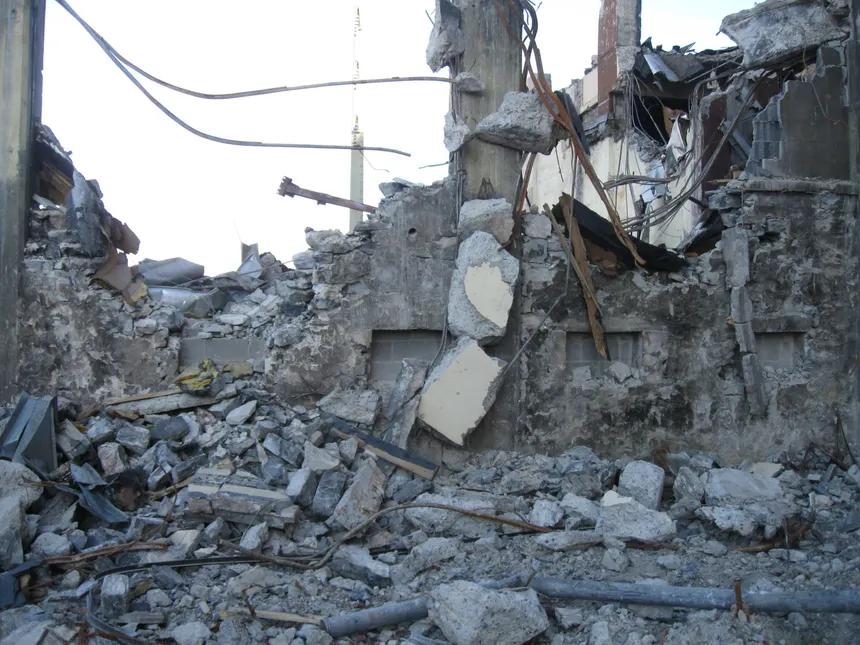
The featured image depicts the Eastleigh neighbourhood and is used for editorial context. No licensed photograph of the actual collapse site was available for use at the time of publication.
Verified Sources & References
Official & Peer ReviewedThe Star Kenya — Eastleigh collapse coverage, 23-24 Oct 2026
“Multiple reports on the collapse, rescue operations, missing persons, NCA registration details, Engineers Board of Kenya investigation, and Governor Sakaja approval statements.”
Citizen Digital — NCA and contractor identification, 23 Oct 2026
“Reporting identifying 9th Street Plaza Limited as developer, Stromax Holdings E.A Limited as contractor, structural engineer Joseph Muturi Mugu of Precise Civil Engineering Ltd.”
People Daily Digital — NCA official statement, 23 Oct 2026
“NCA statement by Acting ED Susan C. Rutto confirming project registration number 53128815710410 (registered 30 July 2025), developer, contractor, architect and structural engineer on record.”
Kenyans.co.ke — Interior CS Murkomen press briefing, 23-24 Oct 2026
“Interior CS Kipchumba Murkomen: 67 construction workers at site; 66 escaped uninjured, 1 hospitalised, 7 missing; 11 shops in basement and ground floor were occupied; rescue teams made voice contact with trapped individuals.”
Pulse Kenya — Governor Sakaja approvals statement, 23 Oct 2026
“Governor Johnson Sakaja: 18-storey structure built without required final construction approvals. Change-of-user approved in 2024, but application to construct 15-storey building plus basement never granted. No occupation certificate issued.”
National Construction Authority Act (Cap 118) and NCA Regulations 2014
“Governing legislation for mandatory project registration within 30 days of contractor appointment, prerequisites for NCA compliance certificate, and role of registered professionals in construction.”
Physical and Land Use Planning Act 2019 (Kenya)
“Governing framework for development permission, county building permits, zoning compliance, and the role of county governments in authorising construction.”
Zuri Estates Team
Property Advisory & Client Coordination
The Zuri Estates Team provides independent property guidance, market intelligence, and acquisition support across Nairobi and the Kenyan Coast. Operating from our Kilimani offices, our desk coordinates developer audits, physical site inspections, and legal conveyancing for homebuyers and investors.
Related Residences, Developments & Neighbourhoods
KILIMANI · DENNIS PRITT ROAD, KILIMANI, NAIROBI
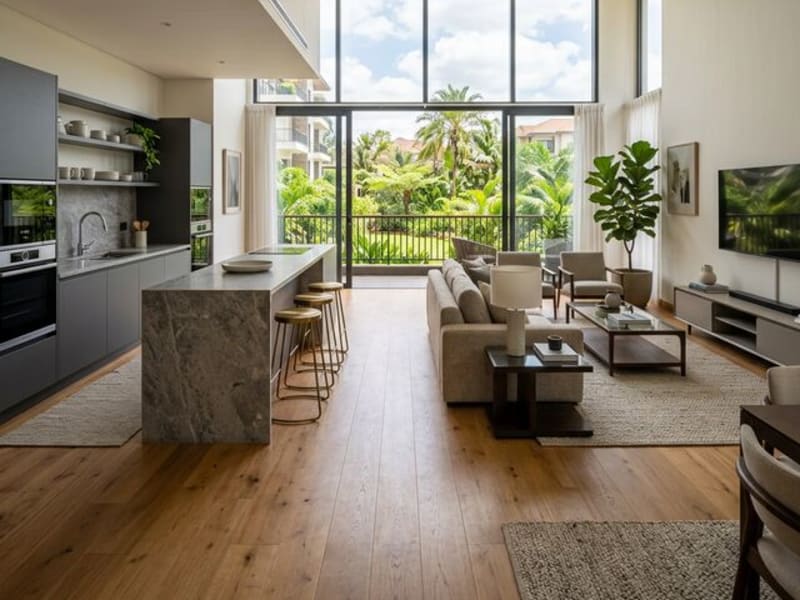
1-Bedroom Double-Volume Loft at Aquarius Residences Kilimani
Iconic 65 sqm one-bedroom double-volume loft with 5.8-meter ceilings and mezzanine bedroom
KILIMANI · DENNIS PRITT ROAD, KILIMANI, NAIROBI
1-Bedroom Executive Suite at Aquarius Residences Kilimani
Curated 44 to 54 sqm one-bedroom executive suite optimized for high-yield short-stay rental

Kilimani · Dennis Pritt Road, Kilimani, Nairobi
Aquarius Residences
Curated 1 and 2-bedroom executive suites and double-volume lofts on Dennis Pritt Road
Upper Hill · Mawensi Road, Upperhill, Nairobi
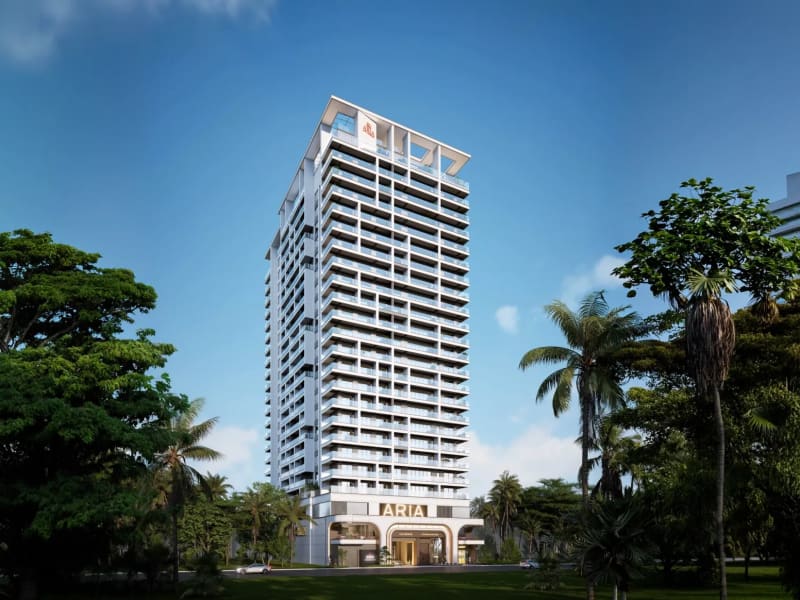
Aria Capital Residences
Signature 1, 2 and 3-bedroom luxury sky residences on Mawensi Road