From Flower Farms to New Communities: How Naivasha's Economy Shapes Property Demand
How floriculture, geothermal industrialization, logistics, and conferencing create distinct residential housing tiers and property demand in Naivasha.
When property developers discuss Naivasha, marketing narratives frequently revolve around lakeside golf courses, luxury holiday villas, and weekend Airbnb getaways. While the hospitality sector is vital, it represents only the visible tip of Naivasha's economic iceberg.
Beneath the leisure surface lies a robust, diverse local economy that generates distinct tiers of housing demand throughout the year. From the massive floriculture complexes surrounding the lake to the hum of geothermal turbines in Olkaria and the freight logistics hub in Mai Mahiu, real economic activity (not speculative trading) is the true foundation of Naivasha real estate.
In this guide, we unpack the economic structure of Naivasha, explain how different employment sectors generate specific housing needs, and outline how investors can align their capital with authentic local demand.
1. The Floriculture Engine: Anchoring Local Employment
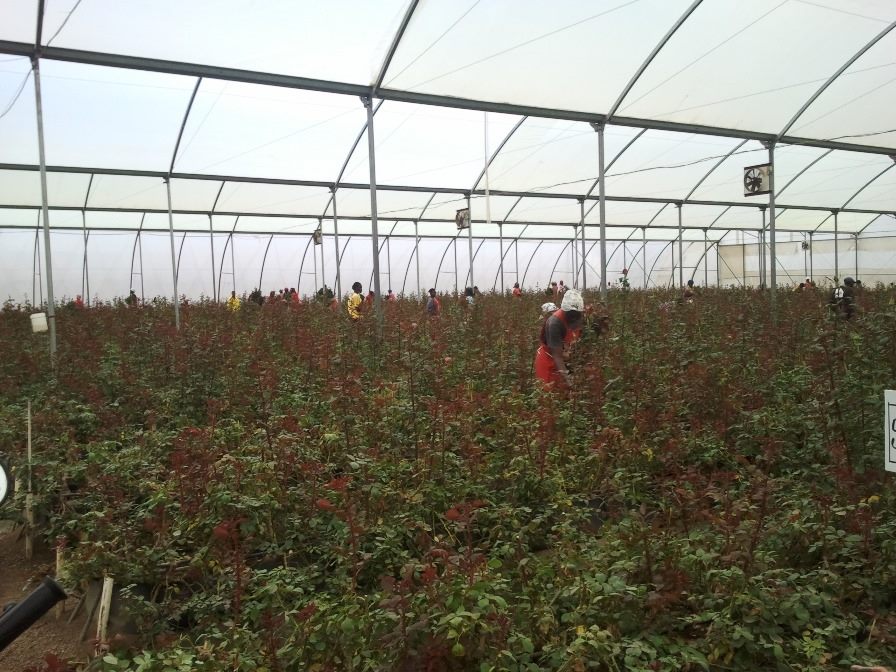
The floriculture industry in Naivasha is one of Kenya's primary export earners. The combination of high equatorial sunlight, moderate elevation, and freshwater irrigation makes the Lake Naivasha basin ideal for commercial rose and cut-flower cultivation.
According to industry data from the Kenya Flower Council, commercial flower farms around the lake employ over 50,000 direct workers and support an estimated 100,000 additional livelihoods in cold-chain logistics, packaging, transport, and equipment supply. This vast agricultural workforce drives steady property demand across two distinct market tiers:
Tier 1: Workforce Rental Housing
Tens of thousands of greenhouse technicians, harvesters, and packing staff require affordable rental accommodation within convenient reach of the farms along Moi South Lake Road. This demand concentrates heavily in peri-urban nodes like Karagita, Mirera, and Kasarani. While rental rates per unit are modest (typically KES 3,500 to KES 8,000 per month for single-room and one-bedroom units), occupancy rates remain remarkably high and default rates are low when properties are properly managed.
Tier 2: Management & Professional Housing
Commercial flower farms operate like sophisticated manufacturing plants. They employ agronomists, post-harvest chemical engineers, cold-chain operations directors, and international general managers. These professionals seek secure, high-specification 2 to 4-bedroom townhouses and detached homes in controlled residential environments, with rental budgets ranging from KES 35,000 to KES 80,000 per month. Developers who build modern, gated family communities with green spaces and reliable water find steady, long-term corporate tenants from the flower farming sector.
Naivasha Economic Pillars Overview
2. Geothermal Energy & Green Manufacturing
Ten kilometres south of the lake, the steam plumes of Olkaria signal another major economic anchor. KenGen and private power producers have developed over 800 megawatts of geothermal power generation in the Hell's Gate and Olkaria volcanic complexes.
Beyond supplying renewable energy to the national grid, KenGen has established a Green Energy Park offering direct steam tapping and cheap baseload power to industrial tenants. Manufacturing plants, fertilizer blending factories, and energy-intensive data centers are establishing operations in Naivasha. This industrialization is introducing a permanent corporate workforce: electrical engineers, plant technicians, IT infrastructure specialists, and administrative managers who require high-quality suburban housing within a 20-minute drive of Olkaria.
3. The Mai Mahiu Special Economic Zone (SEZ) & SGR Freight Hub
At the southern gateway of the sub-county, Mai Mahiu has transformed into a strategic national logistics hub. The convergence of the Standard Gauge Railway (SGR) freight terminal, the Inland Container Depot (ICD), and the Special Economic Zone (SEZ) is shifting industrial cargo processing away from congested Nairobi nodes toward Naivasha.
Customs brokerage agencies, freight forwarders, clearing agents, and warehousing logistics operators are setting up permanent bases around Mai Mahiu. This logistical node creates acute demand for commercial warehousing land and surrounding residential housing for transport operators and administrative staff.
The Three Housing Demand Tiers
Naivasha real estate comprises three distinct tenant groups: (1) Workforce rentals in Karagita and Mai Mahiu; (2) Corporate executive and managerial housing in gated estates; (3) Weekend holiday and leisure home rentals along Moi South Lake and Greenpark.
4. Tourism, Hospitality & Conferencing: The Weekend Multiplier
While industrial and agricultural sectors provide year-round rental stability, Naivasha's leisure and hospitality sector provides the high-margin revenue multiplier. Naivasha is the primary corporate conferencing destination for Nairobi's government ministries, non-governmental organizations (NGOs), and corporate enterprises.
Major resorts like Enashipai, Lake Naivasha Sopa, and the Great Rift Valley Lodge host corporate delegations from Monday to Thursday, followed by high-net-worth leisure travelers on Friday, Saturday, and Sunday. This dual business-and-leisure cycle provides strong occupancy for luxury serviced holiday homes and short-stay villas, generating gross yields that outperform standard residential rentals.
5. Common Investment Misalignments: What to Avoid
Investors seeking to capitalize on Naivasha's economic momentum often make critical design and location mistakes:
Misaligning Typology with Tenant Reality
Building expensive luxury 4-bedroom townhouses in workforce nodes like Karagita or Kasarani is an expensive error. Similarly, attempting to operate a high-end luxury Airbnb in a noisy, unpaved commercial zone lacking lake views or resort amenities results in persistent vacancy. Always match the property design to the specific catchment demographic.
Sewerage & Water Infrastructure Deficits
Municipal sewer lines from NAIVAWASS do not extend to all peri-urban and agricultural areas. Developers of high-density worker apartments must invest in modern on-site bio-digesters and septic drainage systems. Building multi-unit residential blocks without adequate sanitation infrastructure leads to environmental enforcement shutdowns by NEMA and the County Government of Nakuru.
Key Takeaways
- 01.Naivasha's real estate demand is anchored by tangible economic activity: floriculture, geothermal industrialization, logistics, and conferencing.
- 02.Workforce rentals in Karagita and Mai Mahiu deliver reliable, high-occupancy income, but require active, disciplined property management.
- 03.Flower farm executives, agronomists, and KenGen engineers create resilient demand for secure, gated family townhouses with reliable utilities.
- 04.Short-stay holiday villas benefit from both mid-week corporate retreats and weekend family travel from Nairobi.
- 05.Sanitation and water due diligence are critical; off-grid developments must budget for robust bio-digesters and reverse-osmosis water purification.
Conclusion: Aligning Your Investment with Authentic Local Demand
Naivasha's transformation from agricultural flower farms into thriving master-planned communities is not an accident of speculative trading. It is the logical result of abundant clean energy, fertile soils, national logistics infrastructure, and unrivaled proximity to Nairobi.
By understanding the economic anchors driving each neighbourhood and building properties that serve real tenant needs, investors can participate in one of Kenya's most resilient growth corridors across The Highlands.
To review vetted residential developments, serviced plots, and investment opportunities in Naivasha, explore our curated portfolio or contact the Zuri Estates Advisory Team.
Verified Sources & References
Official & Peer ReviewedKenya Flower Council (KFC) Industry Annual Review
“Annual review documenting employment statistics (over 50,000 direct workers in Naivasha basin), export volumes, and employee welfare housing initiatives.”
Special Economic Zones Authority (SEZA) Kenya
“Master development plan and enterprise licensing register for the Mai Mahiu Special Economic Zone and logistics container hub.”
Nakuru County Department of Housing & Urban Development
“Urban spatial review assessing housing deficits, workforce rental concentrations in peri-urban Naivasha, and sanitation infrastructure requirements.”

Antony Baragu
Real estate strategist
Antony specializes in strategic acquisitions across Nairobi's most established residential enclaves, including Kilimani, Kileleshwa, and Westlands. His analytical approach and detailed understanding of off-plan developments assist buyers and investors in evaluating property specifications, payment structures, and market timing.
Zuri Estates Team
Property Advisory & Client Coordination
This article has been reviewed by Zuri Estates Team to ensure the accuracy, completeness, and validity of all market metrics, property details, and investment guidance.
Related Residences, Developments & Neighbourhoods

NANYUKI · THE HIGHLANDS
The Gathering Family Villa at Rivera
Three-bedroom family villa featuring ground-floor guest ensuite, domestic staff quarters, and garden void.

NANYUKI · THE HIGHLANDS
The Gathering Premium Villa at Rivera
Extended three-bedroom villa with upstairs family lounge, staff quarters, and deep-set viewing balconies.

Nanyuki · Nanyuki River, off Nanyuki-Nyeri Highway, Nanyuki, Laikipia County, Kenya
Rivera Villas Nanyuki
An exclusive master-planned enclave of 54 contemporary riverfront villas along the Nanyuki River, featuring a wellness clubhouse, heated pool, deer park, and panoramic Mount Kenya views.

Kilimani · Kirichwa Road, off Argwings Kodhek Road, Kilimani, Nairobi, Kenya
Belmont Residency
A landmark 30-storey mixed-use vertical community on Kirichwa Road uniting hotel-grade residences, a 6,000 sqm retail mall, and panoramic rooftop leisure.